





Creating Worlds and Finding Yourself
- Autism Care
- Stories
- Client
- News
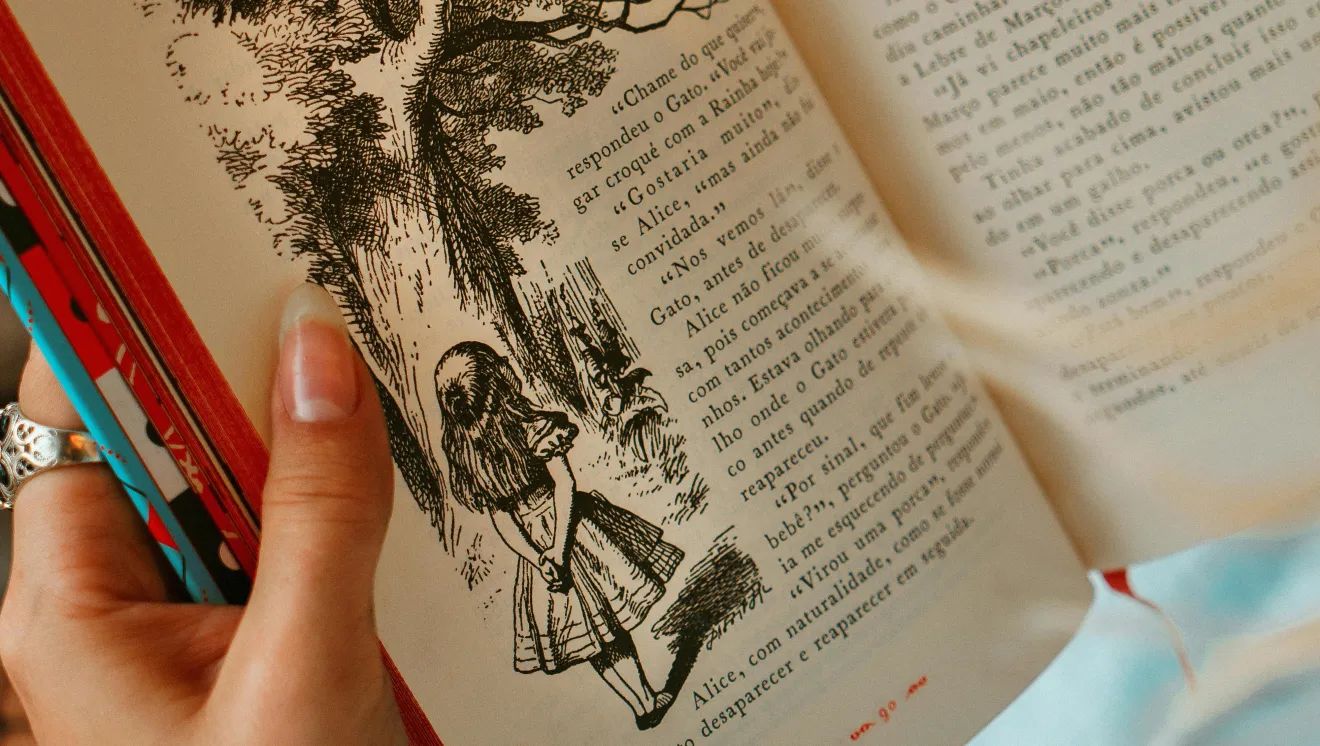
A Boundless Story of Writing and Imagination
“The ability to create with words is one of the most interesting things you can do,” according to Lakota Lane. His journey with creative writing started at just 15 years old. For some, writing is something that begins and ends with academics. For Lane, what began as an exercise to strengthen his skills in school quickly evolved into a tool for understanding the world and his role within it. Self-identifying as a creator and lifelong lover of fairy tales and other whimsical stories, Lane’s relationship with creativity and storytelling serves as a form of self-healing and greater exploration.
“I began to write… as a mental exercise,” he shared. But writing quickly evolved beyond practice. It became a space where he could take control of ideas, narratives, and the atmosphere itself. “I’m the one controlling the story,” he explained, highlighting a sense of ownership that shapes his creative process.
Rather than focusing on a single narrative, he sees storytelling as something expansive—almost alive. One story leads to another, often without intention, growing into something larger than he originally imagined.
“If you keep writing, you keep on expanding without even knowing that you are functionally building something of your own creation,” he said.
That philosophy has taken shape in an ambitious, deeply personal project: a self-designed board game. Using simple materials like pegboards, toothpicks, and handcrafted pieces, Lane is constructing a physical world that mirrors his imagination.
The game centers on living a mundane fantasy life while striving for enlightenment. As the story progresses, players must navigate the challenge of avoiding the game’s villains as opposed to battling them head-on. In this world, players take on the role of a small, ordinary gnome, moving through a landscape filled with symbolic obstacles like ghouls, goblins, and devils. The goal isn’t domination—it’s balance.
“What inspired it is the idea that I’m never going to see a large part of the world,” he said. “That doesn’t mean I can’t imagine it.”
Through this project, Lane’s storytelling becomes interactive. It’s no longer just something to read or write; it’s an exploration of experiences.
At the heart of Lane’s work is the belief that creativity is healing.
“To express is to self-heal,” he said.
Living with autism and ADHD, he openly shared how writing helps him navigate self-doubt, internal challenges, and moments of uncertainty. In his words, those struggles are “some of the devils we have to face.” Lane receives services at Boundless to help him build a fulfilling life not just through his stories but his real-life experiences.
Through storytelling, he creates space to process those experiences, turning abstract feelings into something tangible. Whether through stories, poetry, or game design, his creativity becomes a way forward. A method to make sense of both the internal and external worlds.
Like many creators, Lane recognizes that the process isn’t always comfortable. In fact, he describes a feeling many creatives know well: dissatisfaction with finished work.
“It’s not self-disappointment,” he explained. “It’s more like self-sickness.”
Rather than discouraging him, this feeling becomes part of his growth. It reflects a deep level of care for the work, leading you to question it, revisit it, and push it further. He approaches this by treating himself with the same care and guidance he would offer others, reinforcing the idea that creativity is not just about output, but about self-awareness and development.
Though much of his work has remained within his personal circle, he has taken meaningful steps to share his voice more publicly. At a café in Westerville, he recently performed a poem he wrote about the weather.
His poetry, like his storytelling, is vivid and imaginative, filled with descriptive imagery and abstract thought. While he doesn’t write poetry often, he describes it as something that “happens when it happens,” elaborating that “a poem is anything you desire it to be, much like music.”
He also draws inspiration from a variety of sources, including music and classic literature. Whimsical children’s stories and old fairy tales resonate with him the most; stories that balance imagination with mystery, and simplicity with depth. When researching his own fantasy work, Lane values staying true to the roots of the folklore he incorporates.
One thing that sets Lane apart is how he defines his role as a writer. Rather than focusing solely on traditional storytelling, he sees himself as a “rule writer”—someone who builds frameworks that allow others to create their own experiences.
“It’s about building a structure for other people to use their own creativity,” he explained.
This approach reflects the broader idea that creative writing isn’t just about telling stories. Rather, it’s about making space for them. By creating systems instead of fixed narratives, Lane invites others into the process, allowing imagination to become a shared experience.
For those just beginning their own creative journeys, his advice is refreshingly simple and grounded:
“Write whatever you like the most… and write it all the way through. Then you can see the truth of what type of writer you want to be.”
It’s a reminder that creativity doesn’t require perfection or expertise to begin—it just requires starting.
Lane’s story is a powerful reminder of what creativity can do. It can build worlds from simple materials. It can transform challenges into expression. It can turn uncertainty into purpose.
At Boundless, stories like his highlight the importance of providing space, support, and encouragement for creative exploration. Because sometimes, writing does more than tell a story—it changes the person writing it.